Where to Go Next: Choosing the Right Commercial Cleaning Service
Published By Geoffrey Griffen
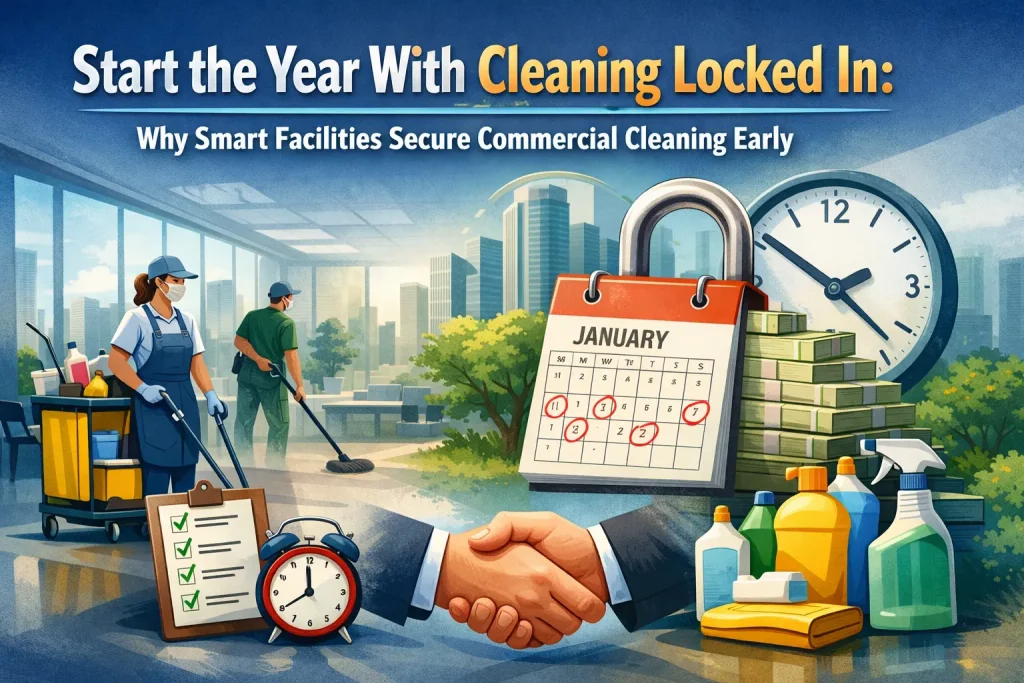
January isn’t just a reset.
It’s when facilities finally make decisions they delayed all year.
Budgets reopen. Vendors get reviewed. Complaints from the previous year are still fresh. And for many operations managers and property managers, one problem keeps resurfacing:
“We can’t keep dealing with cleaning issues like this.”
This is the moment when commercial cleaning contracts get signed—not because someone suddenly cares more about cleanliness, but because the cost of inconsistency has become too obvious to ignore.
Facilities that secure cleaning early don’t scramble later. They stabilize operations, reduce distractions, and move forward without constantly reacting to missed details.
This window doesn’t last long. But while it’s open, it matters.
While Others Review Vendors, You Lock in Stability
December is when problems pile up and nothing gets fixed.
Staff shortages. Missed cleans. Holiday traffic. Temporary patches.
Most facilities limp through the end of the year promising to “deal with it in January.”
January is when that promise either turns into action—or gets postponed again.
Facilities that act early tend to share a few things in common:
- They’re tired of managing cleaning
- They want fewer complaints, not more explanations
- They understand that cleaning shouldn’t require constant oversight
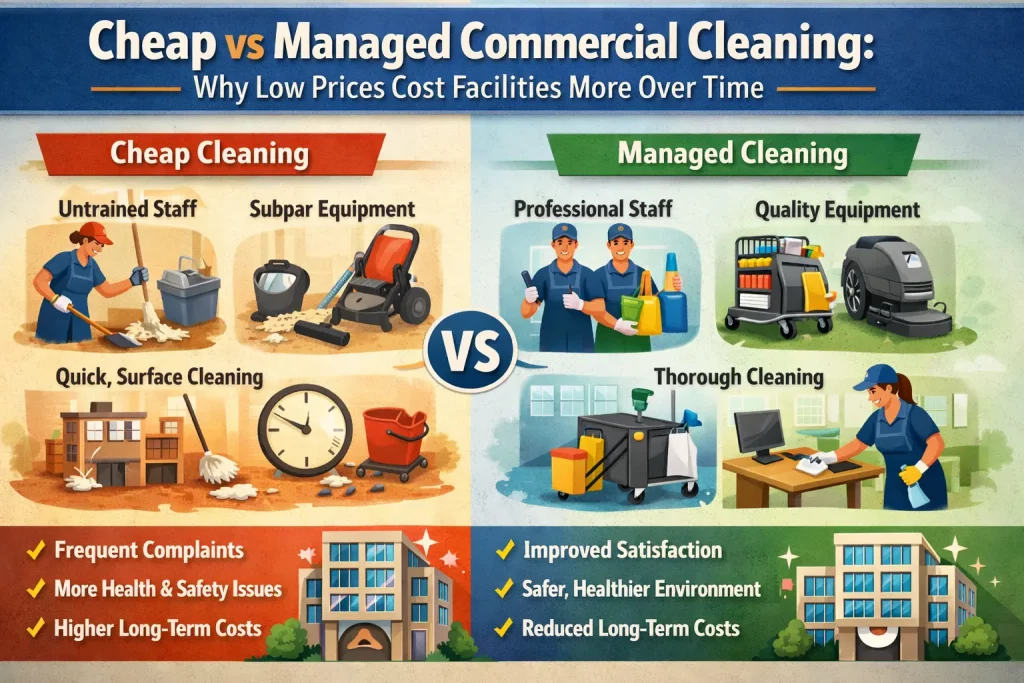
Instead of shopping for the cheapest option, they look for stability.
They aren’t asking:
“Who’s cheapest?”
They’re asking:
“Who can handle this without us babysitting it?”
That mindset shift is what separates facilities that stay reactive from those that finally get control.
The Early-Year Cleaning Spike Isn’t Random
Commercial cleaning demand rises every January for the same reason across industries:
Operations restart, expectations reset, and tolerance drops.
What gets triggered:
- Offices return to normal occupancy
- Warehouses ramp production
- Tenants resume full usage
- Leadership starts paying attention again
At the same time, the cracks from the previous year are impossible to ignore.
Missed trash days.
Restrooms that never quite feel clean.
Floors that look worn no matter how often they’re “mopped.”
January exposes whether your cleaning system is actually a system—or just labor showing up.
Facilities that recognize this early secure better providers.
Facilities that wait often inherit whoever is left.
Why Early-Year Cleaning Decisions Convert Better
Not all buyers are equal. January buyers are different.
They aren’t browsing.
They’re correcting something.
Budgets are cleaner. Timelines are real. Decision-makers are reachable. And there’s usually a clear internal reason for the change—even if it’s not stated out loud.
Common triggers include:
- Tenant complaints escalating
- Staff frustration
- Leadership pressure
- Safety or compliance concerns
- A desire to “fix it before it becomes a bigger issue”
These buyers don’t need convincing that cleaning matters.
They need confidence that switching won’t create new problems.
That’s why conversion isn’t about hype.
It’s about clarity.
The Mistake Facilities Make: Treating Cleaning Like a Short-Term Fix
One of the most common missteps in January is treating cleaning like a one-time correction instead of a long-term system.
A deep clean gets scheduled.
A temporary crew fills in.
Extra attention is paid—for a few weeks.
Then reality returns.
Without structure, nothing sticks.
Facilities that win early think differently. They ask:
- How is quality checked?
- What happens when staff changes?
- Who is accountable when something slips?
- What does “clean” actually mean in writing?
They stop looking for effort and start looking for process.
Turning a Cleaning Change Into a Long-Term Win
Switching cleaning providers is rarely about dissatisfaction alone. It’s about fatigue.
Fatigue from:
- Following up
- Re-explaining expectations
- Managing someone else’s employees
- Being the last line of defense for missed work
Facilities that succeed with a switch don’t chase perfection.
They secure predictability.
That means:
- Defined scopes of work
- Set frequencies
- Inspections that catch issues early
- A provider that manages their own performance
When that structure is in place, cleaning fades into the background—where it belongs.
What Facilities That Get Ahead Tend to Do
Facilities that lock in reliable cleaning early in the year tend to be deliberate, not rushed.
They:
- Review their actual pain points
- Walk the building with intention
- Clarify what matters and what doesn’t
- Choose providers who can explain their systems without fluff
They don’t ask for miracles.
They ask for control.
They also understand something important:
A good cleaning provider should reduce management involvement, not increase it.
Why Waiting Usually Backfires
Facilities that delay often tell themselves:
- “We’ll see how it goes”
- “Let’s give it another month”
- “We’ll revisit after Q1”
What actually happens:
- The same issues repeat
- The urgency fades
- The better providers fill their routes
- Options narrow
By the time the decision is forced, it’s reactive again.
Early decisions are almost always better decisions.
This Is the Window to Fix Cleaning Without Drama
January creates a rare overlap:
- Motivation is high
- Budgets are available
- Decision-makers are engaged
- Change feels justified
Facilities that move during this window usually don’t talk about cleaning again for a long time—because it finally works.
Facilities that don’t often find themselves having the same conversations later, just louder.
Where to Go Next (Service Page Bridge)
If your facility needs consistent, contract-based commercial cleaning—not temporary fixes or unmanaged labor—start with the service that fits your environment:
Each page breaks down how scopes, frequencies, staffing, and accountability are structured so cleaning stops being a recurring problem.
When you’re ready, the next step is a walkthrough—not a sales pitch—to determine fit and expectations before anything changes.
Why KPIs Matter in Commercial Cleaning
If cleaning performance is not measured, it cannot be controlled. Many facilities rely on complaints as their primary feedback mechanism. That is a failure point, not a system.
Commercial cleaning KPIs provide objective visibility into service quality, reliability, and risk.
Core Commercial Cleaning KPIs
Facility managers should track, at a minimum:
- Inspection Pass Rate
Percentage of completed inspections meeting standards. - Issue Resolution Time
Time from issue identification to correction. - Staffing Consistency Rate
Frequency of assigned team continuity. - Scope Adherence Rate
Percentage of completed tasks versus documented scope. - Complaint Frequency
Number and type of cleaning-related complaints.
These metrics identify breakdowns before they become operational problems.
KPIs Reduce Management Burden
Without KPIs, facilities spend time reacting. With KPIs, issues are addressed proactively.
Brown Janitorial Services integrates KPI tracking into its quality control process, reducing oversight demands for facility teams.
KPIs Support Vendor Accountability
KPIs shift cleaning from opinion to performance. They provide a factual basis for reviews, corrections, and contract decisions.
Call to Action:
If your cleaning provider cannot report performance metrics, they are operating blind.