Why “Clean Enough” Is the Most Dangerous Assumption in Warehouse Cleaning
The Hard Truth About Warehouse Cleaning
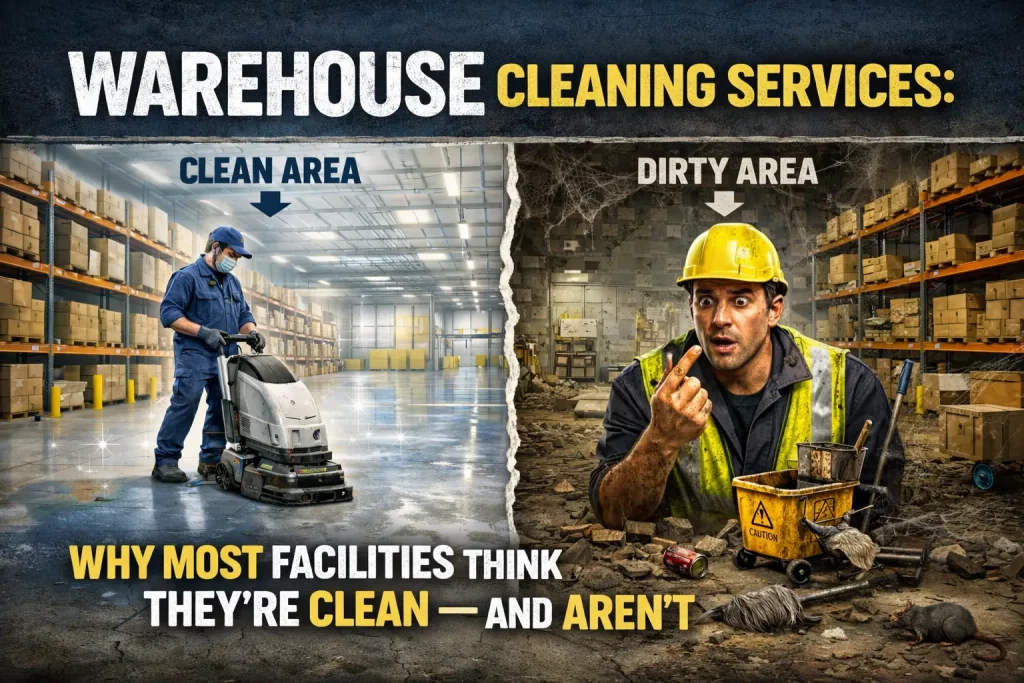
Most warehouses believe they are “clean enough.”
Floors look clear. Trash is emptied. Restrooms are usable. Nothing looks obviously wrong. On paper, everything seems fine.
But warehouses rarely fail because of what’s visible. They fail because of what quietly accumulates over time — dust, debris, residue, neglect, and inconsistency.
Warehouse cleaning is not about appearance. It’s about safety, uptime, compliance, and operational continuity. When those systems break down, the consequences are rarely immediate — but they are always expensive.
Why Warehouses Are Uniquely Difficult to Clean
Warehouses are not offices. They are not retail spaces. They are not light commercial buildings.
They are high-traffic, high-dust, high-liability environments where cleaning mistakes compound instead of disappearing.
Common warehouse realities include:
- Forklift traffic is grinding debris into the floors
- Dust settling on racking, lighting, and equipment
- Oil, grease, and residue create slip hazards
- Shipping materials are shedding constantly
- Employees working around cleaning crews, not away from them
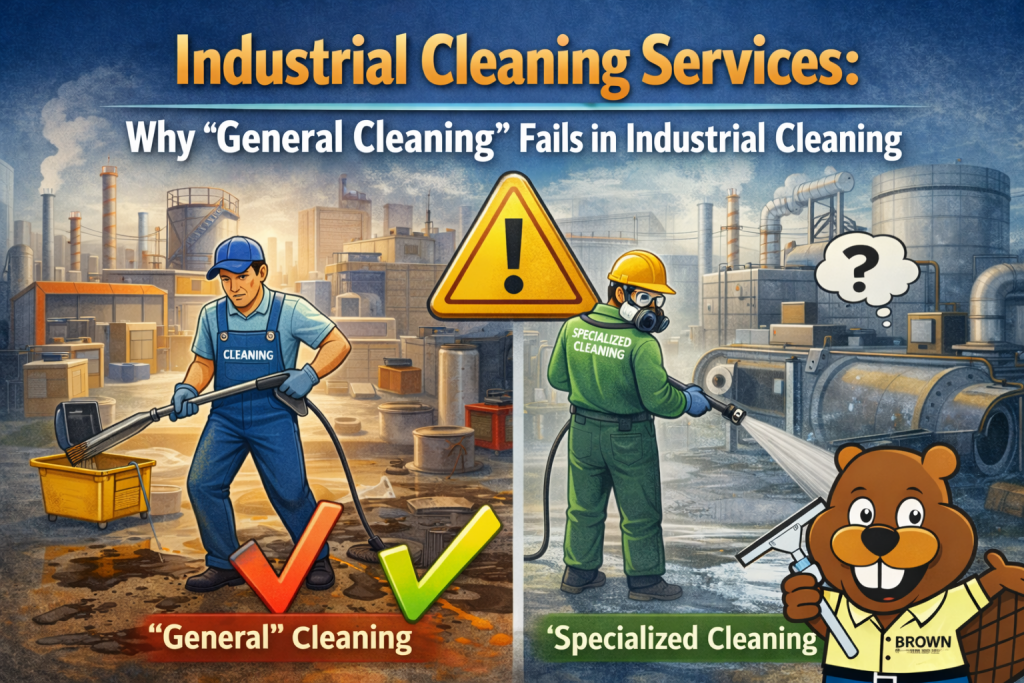
Most cleaning providers are not built for this environment — even if they claim they are.
The #1 Warehouse Cleaning Failure: Treating It Like Janitorial Work
Here’s where most facilities go wrong.
They hire a janitorial company designed for:
- Offices
- Small commercial buildings
- Light nightly cleaning
Then they expect that same model to function inside a warehouse.
It doesn’t.
Warehouse cleaning requires:
- Industrial-appropriate processes
- Defined safety boundaries
- Equipment-aware cleaning methods
- Strict task ownership
- Consistent documentation
Without those, cleaning becomes surface-level and reactive.
Dust Is Not a Cosmetic Issue — It’s a Risk Indicator
In warehouses, dust is often dismissed as “part of the job.”
That mindset is dangerous.
Dust accumulation:
- Reduces air quality
- Creates combustible risks in certain industries
- Settles on inventory and packaging
- Obscures lighting and signage
- Signals missed cleaning cycles
When dust builds up, it tells you something important: your cleaning system is not keeping pace with your operation.
Floors: Where Warehouse Cleaning Either Succeeds or Fails
Most warehouse incidents trace back to the floor.
Slips, trips, equipment instability, and OSHA citations often originate from:
- Residue buildup
- Inconsistent mopping or scrubbing
- Missed spill response
- Worn or untreated surfaces
Spot-cleaning floors does not work in warehouses. Floor care must be:
- Scheduled
- Equipment-appropriate
- Documented
- Adjusted for traffic patterns
If floor care depends on “when it looks bad,” you’re already behind.
Why “Nightly Cleaning” Is Not a Warehouse Strategy
Warehouses don’t shut down the way offices do.
That creates problems:
- Cleaners work around active operations
- Tasks are skipped to avoid disruption
- Accountability disappears because “we couldn’t get to it”
Professional warehouse cleaning requires defined access rules, not assumptions.
If your cleaning provider cannot clearly explain:
- What gets cleaned
- When it gets cleaned
- What happens when access is limited
…then your facility is absorbing the risk.
The Cost of Inconsistent Warehouse Cleaning
Inconsistent warehouse cleaning shows up as:
- Increased safety incidents
- More near-miss reports
- Employee complaints
- Equipment wear
- Regulatory scrutiny
- Lost productivity
These costs don’t appear on cleaning invoices. They appear in operations.
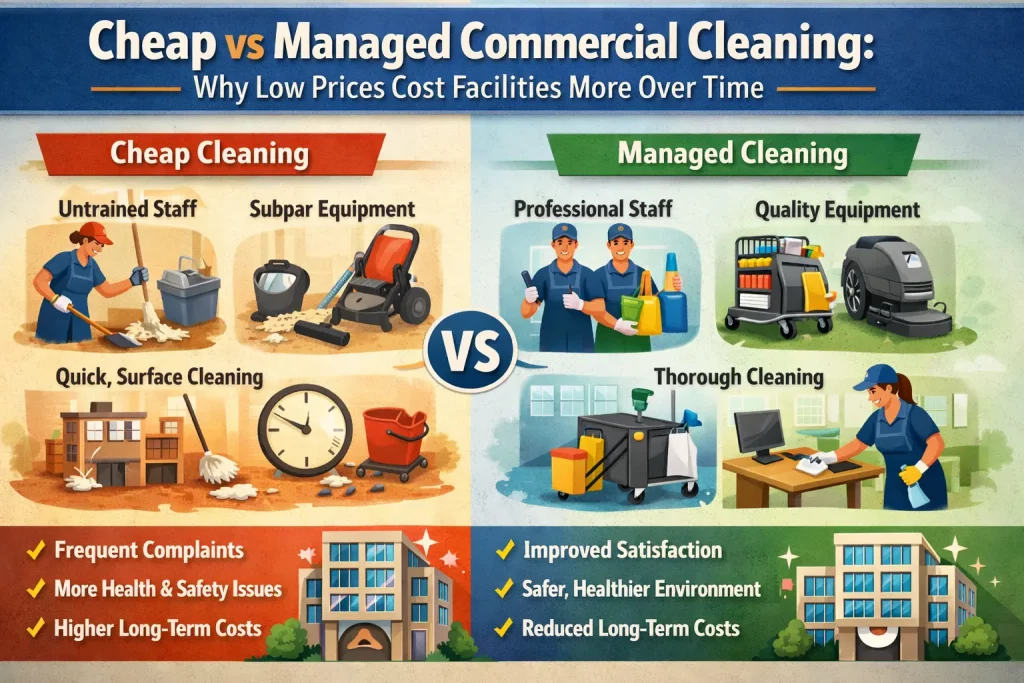
Cheap warehouse cleaning almost always becomes expensive warehouse management.
What Professional Warehouse Cleaning Actually Looks Like
A real warehouse cleaning program includes:
- Defined scope by zone (floors, aisles, docks, restrooms, offices)
- Dust control strategies
- Floor maintenance planning
- Spill response protocols
- Safety-aware cleaning schedules
- Supervisor inspections
- Documentation
It is a system — not a checklist.
Who Warehouse Cleaning Like This Is For
This level of warehouse cleaning is for facilities that:
- Move product daily
- Care about safety metrics
- Want predictable outcomes
- Don’t want to manage cleaners internally
- Need consistency more than the lowest bid
Who It Is NOT For
It is not for:
- Facilities are looking for the cheapest option
- One-off cleanups without maintenance
- Warehouses that treat cleaning as optional
Those facilities are usually called later, after something goes wrong.
The Decision: Most Facilities Delay Too Long
Most warehouse managers wait until:
- Incidents increase
- Audits fail
- Complaints stack up
- Management intervenes
The smarter move is addressing cleaning before it becomes visible.
Service-Page Bridge
If your warehouse cleaning is inconsistent, reactive, or dependent on who shows up, our Warehouse Cleaning Services and Industrial Cleaning Services pages explain how we structure safety-focused cleaning programs, define scopes of work, and accountability systems for active facilities.
Review the service that fits your operation and request a walkthrough when you’re ready.
Warehouse Cleaning Services – Frequently Asked Questions
What is included in professional warehouse cleaning services?
Professional warehouse cleaning services typically include floor care, dust control, restroom sanitation, breakroom cleaning, trash removal, spill response, and cleaning of high-traffic and safety-critical areas. The exact scope should be customized to the warehouse layout, traffic patterns, and operational risks.
How often should a warehouse be professionally cleaned?
Most warehouses require cleaning multiple times per week, with some areas needing daily attention. High-traffic aisles, restrooms, and break areas usually require frequent service, while floor scrubbing, dust control, and deep cleaning are scheduled on a recurring cycle based on usage and safety requirements.
Why is warehouse cleaning important for safety?
Warehouse cleaning directly affects slip resistance, visibility, air quality, and debris control. Dust buildup, residue on floors, and missed spill response increase the risk of injuries, equipment instability, and compliance issues. Consistent cleaning reduces preventable incidents.
Can warehouse cleaning be done while operations are running?
Yes, but only with a defined cleaning plan. Professional warehouse cleaning accounts for active operations by establishing access rules, safety boundaries, and task sequencing. Cleaning without coordination often leads to skipped areas and inconsistent results.
What is the difference between janitorial cleaning and warehouse cleaning?
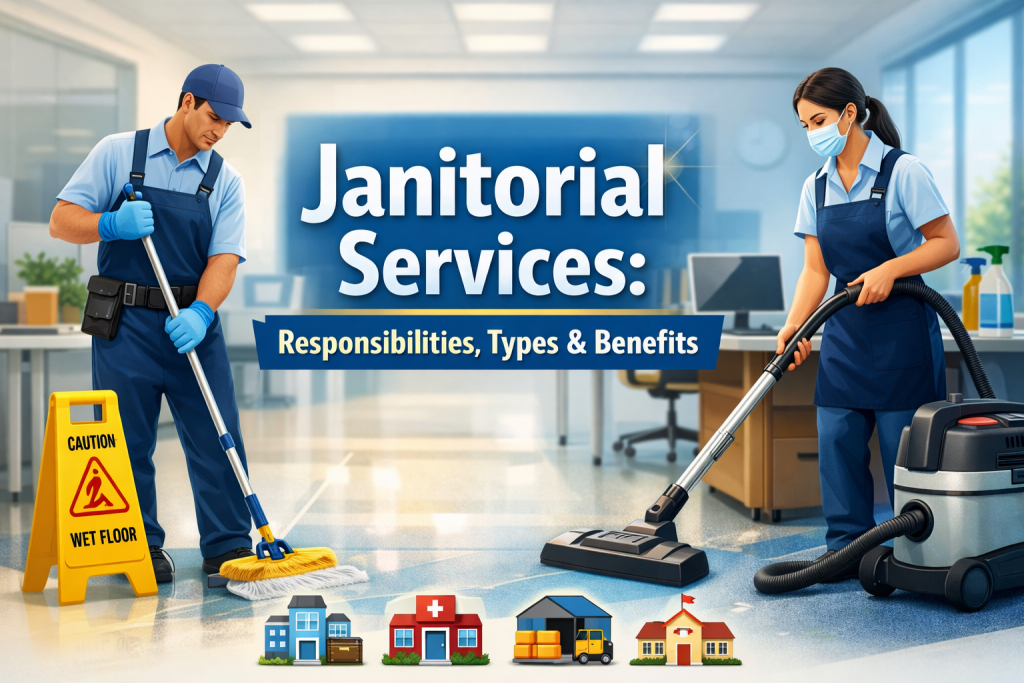
Janitorial cleaning is designed for offices and light commercial spaces. Warehouse cleaning requires industrial-aware processes, safety considerations, and equipment-appropriate methods. Treating warehouse cleaning like standard janitorial work often leads to missed risks and inconsistent performance.
How do I know if my warehouse cleaning is failing?
Common indicators include persistent dust, slippery floors, frequent complaints, rising safety incidents, or cleaning quality that depends on which staff member is present. These signs usually point to a lack of structure and accountability.
Is warehouse cleaning regulated by OSHA?
OSHA does not mandate specific cleaning schedules, but it does require safe walking surfaces and hazard control. Poor warehouse cleaning can contribute to violations related to slips, debris, and unsafe conditions.
How are warehouse cleaning services priced?
Warehouse cleaning pricing depends on square footage, floor type, traffic volume, cleaning frequency, and risk exposure. Facilities with higher operational demands typically require more structured service, which affects cost.
What should I look for in a warehouse cleaning company?
Look for documented scopes of work, safety-aware processes, trained teams, inspection systems, and clear accountability. A professional provider should be able to explain exactly how cleaning is managed—not just what tasks are performed.
When should a warehouse switch cleaning providers?
If cleaning is inconsistent, undocumented, reactive, or contributing to safety concerns, it’s time to reevaluate the provider. Warehouses usually switch after issues escalate, but earlier action prevents larger problems.