The Hidden Cost Difference Between Cheap and Managed Commercial Cleaning
Last updated: 2026
Every facility manager has faced this moment.
Two cleaning quotes. Same building. Same square footage. One is significantly cheaper.
It’s tempting to believe the difference is just margin or overhead. But in commercial cleaning, price gaps usually represent missing systems, not better deals.
Cheap cleaning doesn’t fail immediately.
It fails gradually, and by the time it’s obvious, the damage is already done.
This article explains the real difference between cheap and managed cleaning—and why facilities almost always end up paying more when they choose the lowest bid.
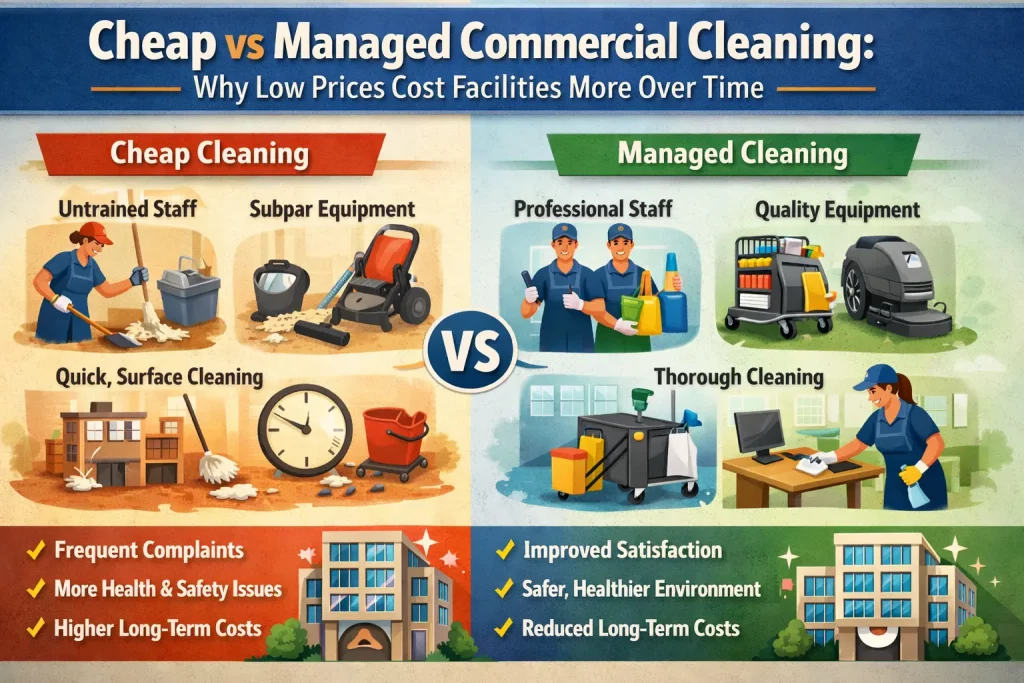
What “Cheap Cleaning” Actually Means
Cheap commercial cleaning usually isn’t malicious or dishonest. It’s simplified.
Lower-priced providers often operate on:
-
Minimal supervision
-
High staff turnover
-
Labor-only models
-
No inspections
-
No performance tracking
They rely on individuals to care enough to do the right thing consistently—without systems to support them.
That works… until it doesn’t.
Why Cheap Cleaning Looks Fine at First
Early on, cheap cleaning often seems acceptable.
Why?
-
New staff try harder
-
Expectations haven’t been tested
-
Issues haven’t surfaced yet
Facilities assume:
“This might actually work.”
Then reality sets in.
Where Cheap Cleaning Breaks Down
Over time, cracks appear:
-
Staff changes disrupt routines
-
Missed details go unnoticed
-
Complaints increase
-
Follow-ups become routine
-
Management time increases
None of this shows up on the invoice.
The real cost is absorbed internally.
What “Managed Cleaning” Actually Buys You
Managed commercial cleaning isn’t about perfection. It’s about control.
You’re paying for:
-
Defined scopes of work
-
Scheduled frequencies
-
Inspections that catch issues early
-
Supervisor oversight
-
Accountability when things go wrong
In a managed system, cleaning quality doesn’t depend on who shows up. It depends on the process.
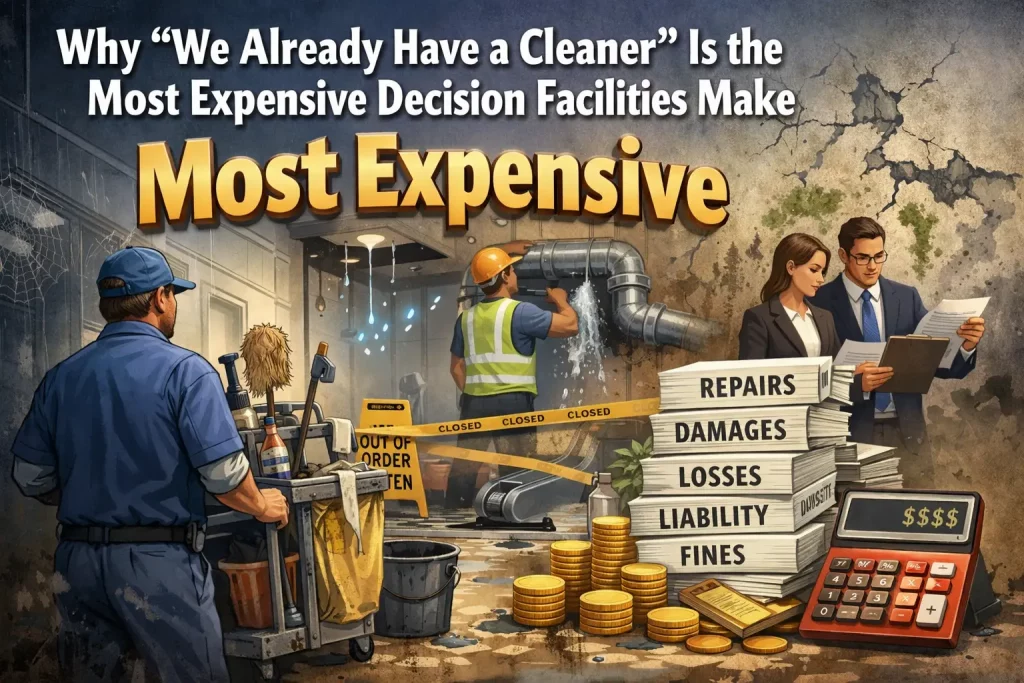
The Hidden Cost of Managing Your Cleaning Provider
Facilities using cheap providers often end up doing unpaid work:
-
Monitoring quality
-
Sending reminders
-
Training new staff indirectly
-
Responding to complaints
-
Acting as the quality control layer
That time has a cost—even if it’s not itemized.
Why Cheap Cleaning Feels Like a Savings (Until It Isn’t)
Low prices reduce short-term spend.
They increase long-term friction.
Facilities eventually pay through:
-
Vendor churn
-
Rework
-
Emergency cleanups
-
Tenant dissatisfaction
-
Brand erosion
Managed cleaning stabilizes costs because it stabilizes performance.
Why Some Facilities Still Choose Cheap Cleaning
Not every facility needs managed service.
Cheap cleaning may work if:
-
Standards are low
-
Risk is minimal
-
Oversight is acceptable
-
Turnover doesn’t matter
The problem is many facilities think they fit this category—until they don’t.
The Question That Clarifies the Decision
Ask yourself:
“If something goes wrong, who absorbs the pain?”
If the answer is “us,” the cleaning isn’t managed.
The Long-Term Math Most Facilities Miss
Managed cleaning costs more per month.
But it costs less per year because:
-
Oversight disappears
-
Complaints drop
-
Vendor churn stops
-
Stability improves
Cheap cleaning saves money on paper. Managed cleaning saves money in reality.
Service Page Bridge
If you want to compare labor-based cleaning versus managed, contract-based service, start with the service that fits your facility type:
Each service page explains how cleaning is structured, so facilities stop absorbing the risk