Why Most Commercial Cleaning Quotes Fall Apart After the Contract Is Signed
“Just give me a number.”
That’s what most facility managers want when they ask about commercial cleaning pricing. Not because they don’t care about quality—but because they’ve been burned before and don’t want another long conversation that ends with surprises.
The problem is this:
Commercial cleaning does not have a real price until the system behind it is understood.
If you’ve ever accepted a low quote that slowly turned into missed cleans, staff turnover, and constant follow-ups, you already know this.
This article exists to explain what commercial cleaning actually costs, why quotes vary so wildly, and how to tell—before you sign—whether a price will hold up in real life.
Why Commercial Cleaning Prices Are All Over the Place
If you’ve gathered multiple quotes, you’ve probably seen this pattern:
- One price feels too high
- One price feels suspiciously low
- One price sounds reasonable but is vague
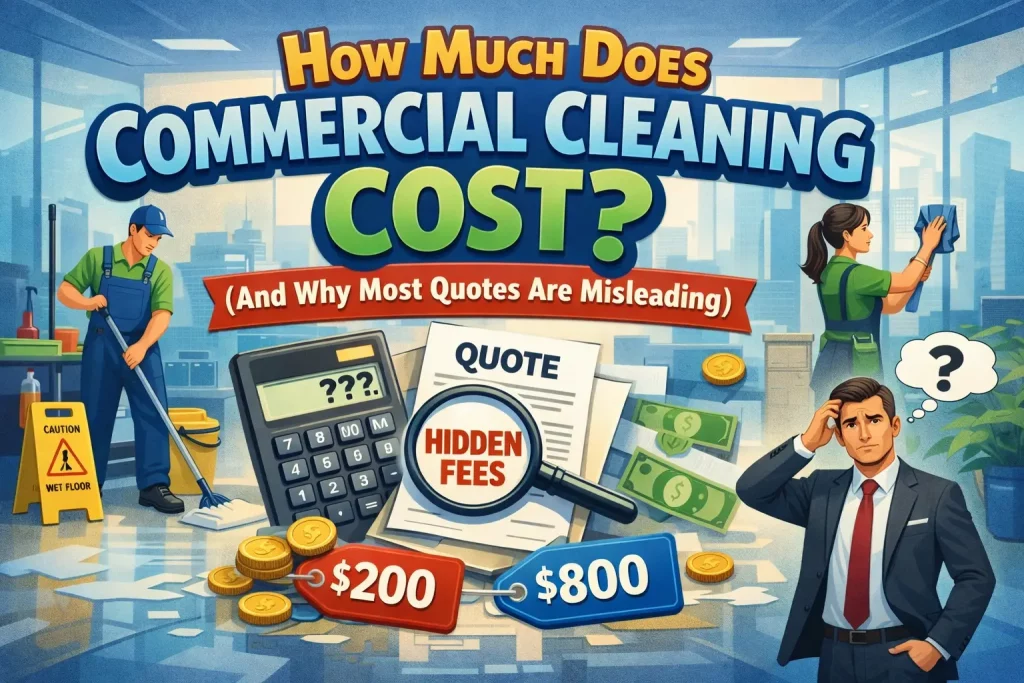
This happens because many quotes are not pricing service. They’re pricing labor time.
And labor alone is not a cleaning system.
Low quotes usually exclude:
- Supervision
- Quality control
- Documentation
- Coverage planning
- Accountability when something goes wrong
Those costs don’t disappear. They get pushed onto you.
The Three Pricing Models You’re Actually Comparing
Most commercial cleaning quotes fall into one of these buckets:
1. Labor-Only Pricing
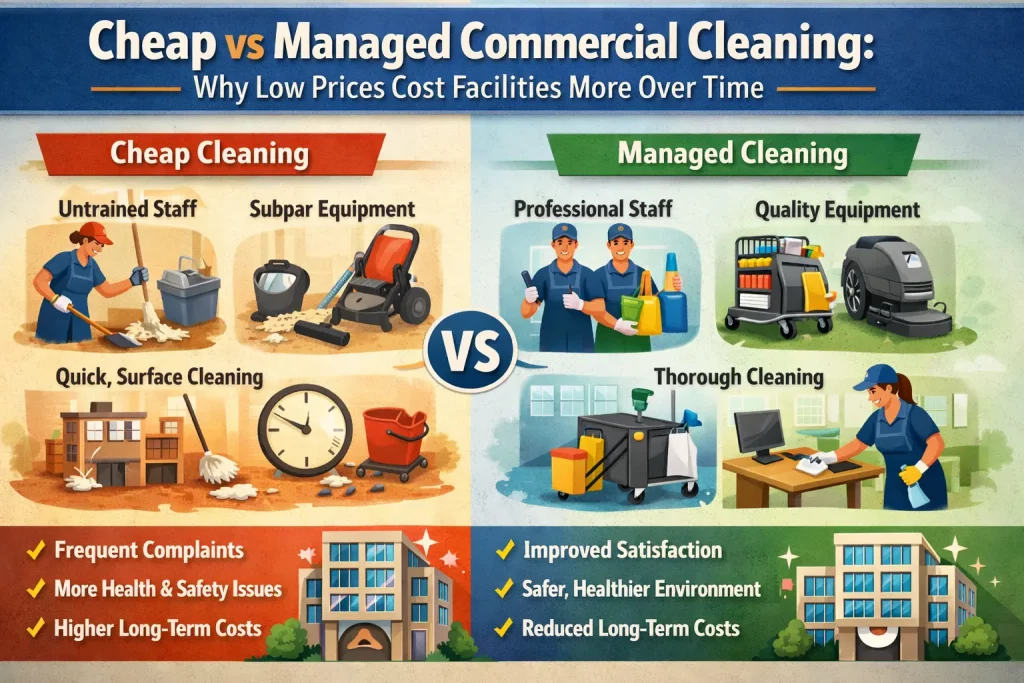
This is the cheapest option on paper.
You’re paying for bodies and hours, not outcomes. If someone calls out, leaves early, or skips details, there is no built-in correction mechanism.
This model depends entirely on individual effort—and fails the moment staffing changes.
2. Task-Based Pricing Without Oversight
Slightly better, still fragile.
There’s a task list, but no verification. You only know something was missed after someone complains.
This is where many facilities get stuck: not cheap enough to ignore, not reliable enough to forget.
3. Managed, Contract-Based Pricing
This is where pricing stabilizes.
You’re paying for:
- Defined scope
- Fixed frequencies
- Inspections
- Supervision
- Issue resolution without escalation
The price is higher upfront—but lower in total cost because your time stops being consumed.
Why “Per Square Foot” Pricing Is a Trap
Per-square-foot pricing sounds objective. It isn’t.
Two buildings with the same square footage can have wildly different:
- Traffic patterns
- Restroom usage
- Industry risk
- Floor types
- Cleaning tolerance
Square footage is a reference point—not a pricing truth.
Facilities that rely on per-square-foot alone often underprice themselves into chronic problems or overpay for services they don’t need.
The Cost You Should Actually Be Watching
The most expensive cleaning is not the highest invoice.
It’s the cleaning that:
- Requires constant follow-up
- Creates internal friction
- Produces complaints
- Forces rework
- Pulls management into daily oversight
That cost never shows up on paper—but it shows up in time, stress, and reputation.
The Right Question to Ask About Pricing
Instead of asking:
“Why are you more expensive?”
Ask:
“What happens when something goes wrong?”
A real provider can answer that clearly.
A fragile one can’t.
Service Page Bridge
If you want transparent, contract-based pricing that reflects real service delivery, start with the service that matches your facility:
Each page explains how scopes, frequencies, and accountability are structured so pricing stays stable after the contract is signed.